

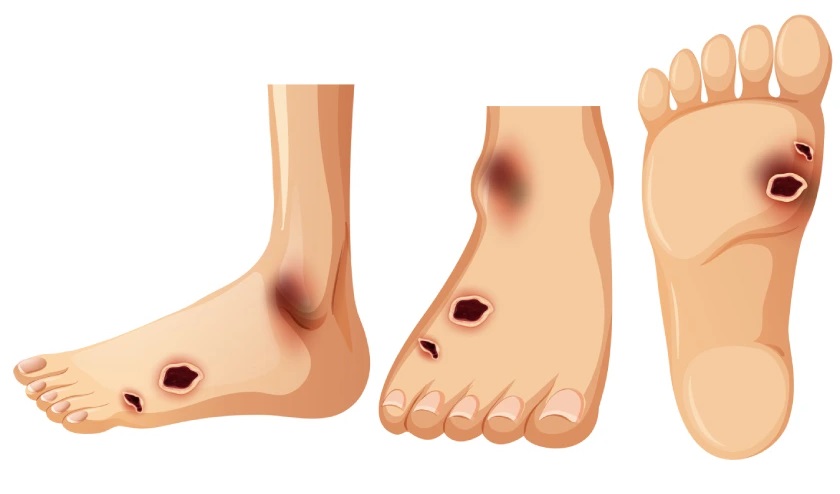
Diabetic Foot Treatment in Jabalpur
A small cut, blister or wound on the foot may need extra attention when you have diabetes. Diabetes can affect sensation in the feet and may also interfere with normal wound healing. This means an injury that initially looks minor can sometimes become a non-healing ulcer or develop an infection.
If you have a foot wound that is not healing, recurrent swelling, discharge, skin colour changes or an ulcer, you can consult Dr. Sharad Kumar for diabetic foot treatment in Jabalpur. The first step is a careful assessment of the wound and surrounding tissue so that further treatment can be planned according to its condition.
Dr. Sharad Kumar – MBBS, MS, MCh
Cosmetic & Plastic Surgeon
What Is a Diabetic Foot?
Diabetic foot refers to foot problems that develop in people living with diabetes. Over time, diabetes can affect the nerves and circulation in the feet. Reduced sensation may make it difficult to notice a cut, blister or pressure injury, while poor circulation can make some wounds slower to heal.
A diabetic foot problem does not always begin with a large wound. It may start with something as simple as a blister, cracked skin, callus or minor injury.
Early examination is particularly important when a wound is getting deeper, showing signs of infection or not improving as expected.
Signs of a Diabetic Foot Problem
People with diabetes should regularly check their feet and seek medical advice if they notice:
- A wound or cut that is not healing
- An open sore or foot ulcer
- Redness or swelling around a wound
- Fluid, pus or an unusual smell from the wound
- Black or darkening skin around a toe or wound
- Blisters that repeatedly develop in the same area
- Numbness, tingling or reduced sensation
- Increasing pain or tenderness
- Changes in the colour or temperature of the foot
- Fever along with an infected foot wound
Loss of sensation can mean that some serious wounds cause surprisingly little pain. For this reason, the appearance and progression of the wound can be as important as pain.
How Is a Diabetic Foot Ulcer Treated?
A diabetic foot ulcer is an open wound, commonly found on pressure-bearing areas of the foot or around the toes. Treatment depends on factors such as the location and depth of the ulcer, infection, surrounding tissue, blood supply and the patient's overall health.
For patients looking for diabetic foot ulcer treatment in Jabalpur, evaluation may include checking the wound itself, surrounding skin, signs of infection and other factors that could be delaying healing.
Treatment is then decided according to the findings rather than following the same approach for every wound.
Wound Assessment
The wound is examined for its size, depth, tissue condition, discharge and signs of infection. The surrounding skin is also checked because redness, swelling and tissue changes can provide useful information about the progression of the wound.
Wound Cleaning and Dressing
Appropriate wound cleaning and dressing help protect the affected area and maintain conditions that support healing. The type and frequency of dressing can vary depending on the wound.
Debridement When Required
Some wounds contain dead or unhealthy tissue that may interfere with healing. In selected cases, debridement may be advised to remove this tissue. Whether debridement is appropriate depends on the wound and its blood supply.
Managing Infection
An infected diabetic wound requires medical attention. The treatment approach depends on the severity and extent of infection. Antibiotics may be prescribed when clinically indicated rather than being used automatically for every ulcer.
Reducing Pressure on the Wound
Repeated pressure on an ulcer can make healing difficult, particularly when the wound is on the sole of the foot. Depending on its location, measures may be advised to reduce pressure on the affected area.
Care for Non-Healing Diabetic Wounds
Diabetic wounds can behave differently from ordinary cuts and injuries. Reduced sensation may allow repeated pressure or trauma to continue without the person noticing it, while circulation and other health factors can affect healing.
For this reason, diabetic wound treatment in Jabalpur should focus on more than simply covering the wound with a dressing.
The wound needs to be assessed for infection, dead tissue, pressure and other factors that may be preventing normal healing. Diabetes management is also an important part of overall care, and coordination with the patient's physician or diabetes specialist may be required.
When Is Surgery Considered?
Not every diabetic foot wound requires surgery. Many wounds can be managed with appropriate wound care and medical treatment.
Surgical assessment may become necessary when there is significant dead tissue, a deep infection, an abscess, involvement of deeper structures or another complication that cannot be adequately managed with routine wound care alone.
The decision is made after examining the wound and assessing the patient's individual condition.
Why You Should Not Ignore a Foot Wound
Waiting for a diabetic foot wound to heal on its own can allow a small problem to become more difficult to manage.
Early medical assessment can help identify infection, tissue damage and other factors that may delay healing. It also gives the treating doctor an opportunity to decide whether the patient needs wound care alone or evaluation from other specialists.
People with diabetes should therefore avoid self-treating persistent wounds with home remedies or repeatedly applying over-the-counter products without medical advice.
About Dr. Sharad Kumar
Dr. Sharad Kumar – MBBS, MS, MCh
Dr. Sharad Kumar is a Cosmetic and Plastic Surgeon in Jabalpur. His surgical training covers the broader field of plastic surgery, and he practises at Niramaya Health Care in Wright Town, Jabalpur.
For a diabetic foot wound, the consultation begins with examination of the affected area and assessment of the tissue and wound condition. Where a patient's condition requires additional diabetes, vascular or other specialist management, coordinated care may form part of the treatment plan.
Taking Care of Your Feet with Diabetes
Medical treatment works best when it is supported by careful day-to-day foot care.
People with diabetes should check their feet regularly for cuts, blisters, redness, cracks or swelling. Feet should be kept clean and dry, and footwear should fit properly without repeatedly rubbing against the skin.
Avoid walking barefoot, particularly when sensation in the feet is reduced. Do not cut corns, calluses or damaged tissue yourself.
Most importantly, do not ignore a wound simply because it is not painful.
When Should You Seek Medical Attention?
Arrange a medical examination if you have diabetes and develop an open wound, ulcer, persistent blister or wound that is not showing signs of healing.
Seek prompt medical attention if there is spreading redness, increasing swelling, pus, foul-smelling discharge, fever, rapidly worsening pain, blackening of the skin or another significant change in the foot.
These symptoms may require urgent assessment rather than waiting for a routine appointment.
Frequently Asked Questions
Which doctor should I consult for a diabetic foot wound?
The appropriate specialist depends on the wound. Diabetic foot management can involve wound-care professionals, surgeons, diabetes physicians and, when circulation is impaired, vascular specialists. A clinical examination helps determine what type of care is required.
Can a diabetic foot ulcer heal?
Many diabetic foot ulcers can heal, but healing varies considerably between patients. The size and depth of the wound, infection, blood circulation, pressure on the area and diabetes control can all affect recovery.
Is every diabetic foot wound infected?
No. An ulcer and an infected ulcer are not the same thing. A doctor should assess the wound for clinical signs of infection and determine whether infection-specific treatment is necessary.
Does every diabetic foot ulcer require surgery?
No. Treatment depends on the individual wound. Some wounds may be managed with wound care, dressings and pressure reduction, while others may require debridement or surgical management.
Should I wait if my diabetic foot wound is not painful?
No. Diabetes-related nerve damage can reduce sensation, so lack of pain does not necessarily mean that a wound is minor. A persistent or worsening wound should be examined.
Where can I consult for diabetic foot treatment in Jabalpur?
Dr. Sharad Kumar practises at Niramaya Health Care, 292, Prem Mandir Chowk, in front of Delhi MRI Center, Wright Town, Jabalpur, Madhya Pradesh – 482002. An appointment can be scheduled before visiting the clinic.